
Printer Flex PCB Applications
Customer Case Studies
Company Name: Rup Prince
Company Location: United States
Cooperation Duration: 2017 – Present
Flex PCB Printer Application: Commercial Printer and 3D Printer FPC
Order Service: FPC Sample, FPC Mass Production, and SMT Service.
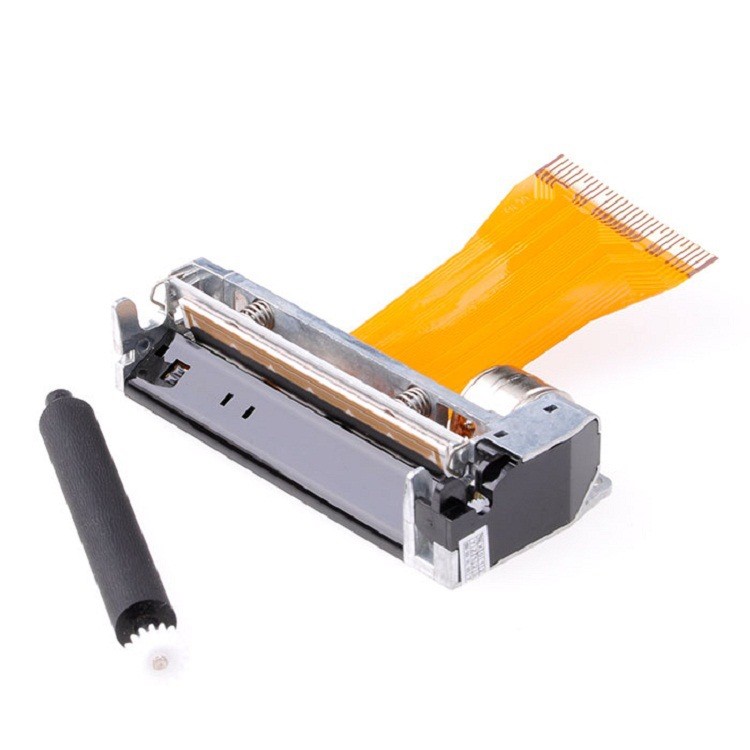
Flex PCB Printer Application Example: Rup Prince
Flex PCB Printer Application Example: Rup Prince
Following the conclusion of the Hong Kong Electronic Fair, Jake Bogert visited our FPC production process factory in Shenzhen. He provided an overview of his Printer business, focusing on the sale and after-sales service of commercial printers and 3D printers. After discussing potential collaboration, we proposed starting with an FPC sample.
Our engineers thoroughly studied and examined Rup Prince’s Gerber file. After completing the necessary checks, we generated the engineering drawing, which was approved by Rup Prince. Subsequently, our FPC factory initiated the production of a proof for the FPC sample. Within 5 days, the sample was manufactured and installed on Rup Prince’s printer motherboard for testing. The FPC connector seamlessly matched with the PCBA connector, ensuring smooth printing functionality.
Upon successful confirmation of the sample’s performance, we proceeded with the mass production process.
How We Helped Our Customer’s Business
We provided our customer with a comprehensive one-stop manufacturing service for Flex PCBs. Flex PCBs are printed circuits made from flexible insulating substrates, offering numerous advantages over rigid PCBs.
Taking the application of Flex PCBs in printers as an example, FPCs can be freely bent, rolled, and folded, allowing for flexible arrangement based on spatial layout requirements. They can be moved and stretched in three-dimensional space, seamlessly integrating component assembly and wire connections. FPCs significantly reduce the size of electronic products, making them ideal for the evolving demands of high-density, miniaturized, and highly reliable electronic devices.
Our solution involved using FPC boards to establish connections between the main PCB motherboard and ink in printers. The FPCB etching ink set included PI-Cu film, LOGI-DU32M insulating layer ink, LOGI-EL01F etching solution, and LOGI-CS01U cleaning solution, which were employed throughout the entire FPCB preparation process. By utilizing inkjet printing and etching techniques, we achieved customized circuit preparation.
Our manufacturing process consisted of the following steps: graphic design, inkjet printing, etching, and cleaning. Here’s a breakdown of the specific process:
- Design: Graphics were either imported externally or directly created using drawing software.
- Print: Using LOGI-DU32M insulating ink, the designed patterns were printed on the PI-Cu film through inkjet printing. The printed film was then dried at 120°C for 20 minutes on a heating table and cured with 365 nm UV light for 15 minutes.
- Etch: The substrate was immersed in LOGI-EL01F etching solution, which selectively removed unprotected base material while the insulating layer remained intact. The etching solution was maintained at approximately 40°C. After completing the etching process, the substrate was rinsed with water to remove any residual etching solution.
For testing FPC connectors, we opted for high-current shrapnel micro-needle modules. These modules provided robust overcurrent capabilities, fulfilling the requirements of transmitting higher currents during FPC connector testing. Moreover, the modules ensured stable and continuous connections for small-pitch FPC connectors. With an average service life exceeding 20,000 cycles, they effectively handled high-frequency FPC connector tests, improving testing efficiency and reducing costs.
Through our expertise and manufacturing capabilities, we successfully supported our customer, Rup Prince, in achieving significant business development in their FPC
Types of Flexible PCBs for Printers We Can Manufacture
It’s worth noting that FPC boards find applications in various other types of printers. Here, we provide an introduction to some of these printers. Here are the classifications:
- Printer classification can be divided into two categories based on print output: serial (LPM) and line and page (PPM).
- Based on the printing principle, printers can be further classified into various types, including needle type, dot matrix, inkjet type, thermal sensitive type, thermal transfer type, laser type, LED type, LCS type, fluorescent type, electric burning type, magnetic type, ion type, and more.
- Currently, the main types of printers are needle printers, inkjet printers, and laser printers.