
FFC VS FPC

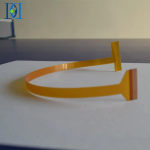
What is Flexible Flat Cable (FFC)
FFC cables, also known as Flex Cables or flexible flat cables, offer the flexibility to choose the number and spacing of wires according to specific requirements. This flexibility makes connections more convenient, significantly reduces the volume of electronic products, lowers production costs, and improves production efficiency.
FFC cables are commonly used as data transmission cables between PCB boards and in miniaturized electrical equipment. They are available in various specifications, including 0.5mm, 0.8mm, 1.0mm, 1.25mm, 1.27mm, 1.5mm, 2.0mm, 2.54mm, and other flexible cables with different spacing options.
What is Flexible Printed Circuit (FPC)
FPC cables, also known as Flex PCB Cables, are a group of connecting wires that can be bent to a certain extent. FPC cables serve various functions and can be categorized into different types, including FPC antennas, FPC touch screens, FPC capacitive screens, and more.
The primary purpose of FPC cables is to establish connections between two related components or products. Nowadays, flex cables are widely utilized in many products such as printers, mobile phones, and notebooks due to their inherent flexibility.
The difference between FFC cable and FPC cable
The thickness of the FFC cable is 0.12mm. The cable consists of upper and lower insulating films, with a flat copper conductor pressed in the middle. Therefore, the cable thickness (IT) is determined by the sum of the thickness of the upper adhesive film, the thickness of the conductor, and the thickness of the lower adhesive film. Commonly used film thicknesses include 0.043mm, 0.060mm, 0.100mm, etc., while commonly used conductor thicknesses are 0.035mm, 0.05mm, 0.100mm, etc.
The FPC line, short for flexible printed circuit, differs in manufacturing process from the FFC line:(1) FPC involves processing FCCL (flexible copper clad foil) through chemical etching to create flexible circuit boards with various circuit patterns.(2) The FFC cable, on the other hand, utilizes a flat copper wire conductor that is sandwiched between upper and lower layers of insulating foil films.
Main specifications and special functions of FFC cable:
The FFC cable generally has a lifespan of 5,000 to 8,000 opening and closing cycles. If it is opened and closed approximately 10 times per day on average, it can last around a year and a half.
Main Specifications / Special Features:
- Working temperature: 80°C to 105°C
- Rated voltage: 300V
- Suitable for general electronic and electrical internal wiring, such as audio and video equipment
- Conductor: Tinned or bare copper stranded wire, 32-16AWG (0.03-1.31mm²)
- FFC cable insulation layer: PET
- Ribbon parallel arrangement
- Pitch: 0.5mm to 2.5mm, with side-by-side lines for easy insertion into each socket of the printed circuit board
- Can be used as a substitute for a wiring harness
- Possesses characteristics such as acid and alkali resistance, oil resistance, heat resistance, moisture resistance, and mold resistance.
FFC cable processing method:
The processing method for a FFC cable involves the following operations:
- Lamination: The upper and lower insulating films and the flat copper conductor are laminated together.
- Outgoing Plating: Plating is applied to ensure proper conductivity.
- Plating Inspection: The plated FFC cable is inspected to ensure the plating quality.
- Conduction: The FFC cable undergoes a conduction test to verify its electrical conductivity.
- Cutting: The FFC cable is cut into the desired length.
- Cutting Inspection: The cut FFC cable is inspected to ensure accurate dimensions.
- Follow-up Processing: Additional processing steps, such as corner sticking, may be performed.
- Packaging: The FFC cables are packaged for protection and convenience.
- QC Inspection: Quality control inspection is conducted to verify the overall quality of the FFC cables.
- Storage: The FFC cables are stored in a suitable environment.
- Shipment: The FFC cables are shipped to their destination for use or distribution.
Lamination–Outgoing Plating–Plating Inspection–Conduction–Cutting–Cutting Inspection–Follow-up Processing (such as corner sticking)–Packaging–QC Inspection–Storage–Shipment
Lines are formed is different
FFC cable: FFC is a flat copper foil sandwiched between the upper and lower layers of insulating foils. The finished product is simpler and thicker.
FPC cable: It is a flexible circuit board with different single-sided double-sided and multi-layer structure obtained by chemical etching of FCCL (flexible copper clad foil).
In terms of price, the natural FFC cable is much cheaper. Considering the production cost, more companies prefer to use the related design of the FFC cable.
Whether FFC cable and FPC can replace each other
In fact, a friend who asks this question may not have much knowledge about this industry. Currently, and for the foreseeable future, neither FFC cables nor FPC cables can completely replace each other. These two types of cables will coexist and complement each other. Some individuals who are not extensively involved in the field of FFC cables may disagree with our conclusions.
Let me analyze them one by one:
The processes involved in manufacturing FFC cables and FPC cables are distinct. FFC flexible cables are created by pressing two layers of hot-melt PET or PI film onto a group of flat copper wires arranged at specific intervals under a high-temperature wheel. In contrast, FPC cables are formed through etching on a single layer of PI film covered with a copper film to create various circuit structures.
- The complexity of circuit structures differs between FFC cables and FPC cables. For intricate curved line structures, FPC cables are the preferred choice, while FFC cables are mainly used for straight cables. FPC cables are generally softer than FFC cables and are commonly used in smartphones.
- FFC cables and FPC cables have varying temperature resistances. FFC cables made with hot-melt adhesive film and PET as the base material typically have temperature resistances of only 80°C or 105°C. In contrast, FPC cables can withstand temperatures exceeding 200°C, making them more suitable for high-temperature environments.
- The cost of FFC cables differs from that of FPC cables. FPC cables can be manufactured with curved or straight structures, but regardless of the cable’s simplicity, a separate mold must be created for each specification. The cost of an average fast wire mold starts at 1,500 yuan, with slightly lower accuracy.
Higher precision medium wire dies cost around 2,500 to 3,000 RMB, while slow wire dies cost over 5,000 RMB for customers with stricter dimensional accuracy requirements. In contrast, FFC cables do not require mold creation, significantly reducing costs.
- Efficiency varies between FFC cables and FPC cables. FFC cable production is highly efficient, while the more complex and multi-step process of FPC cables results in lower production efficiency. Additionally, for simple curved structures, FFC cables can be easily formed using polylines, eliminating the need for FPC cables.
- The conductor materials used in FFC cables and FPC cables differ. FPC cables etch the entire layer of copper foil as the conductor, with typical thicknesses ranging from 12U to 70U for single-sided and double-sided copper foils. Conversely, FFC cables can have conductor thicknesses of 35U, 50U, or 100U. If higher current-carrying capacity and lower conductor impedance are required, FFC cables with thicker conductors are advantageous, assuming the conductor length is not excessively long.
In conclusion, FFC cables and FPC cables cannot replace each other at present. They will continue to coexist, serving as connectors in various applications for an extended period.
FFC VS FPC Connector
FPC connector is a flexible printed circuit board connector, usually used to connect two or more flexible printed circuit boards or to connect a flexible printed circuit board to a rigid board. FPC connectors consist of electrically conductive metal foils, insulating substrates and connectors with extremely high bendability to accommodate the shape of bent printed circuit boards.
FPC connectors are also widely used in automotive electronic connectors, vehicle GPS navigation, medical equipment, audio, digital machine, camera, car audio, television, typewriter, calculator, cash register, telephone, CD-ROM, VCD, DVD, copier, printer, wireless instrumentation, visual equipment and aerospace products and other fields。