
A flexible circuit board (FPC) is a type of printed circuit board that utilizes flexible insulating substrates. It belongs to the category of printed circuit boards and offers distinct advantages over rigid PCBs. FPCs are known for their high wiring density, lightweight design, thinness, and excellent flexibility.
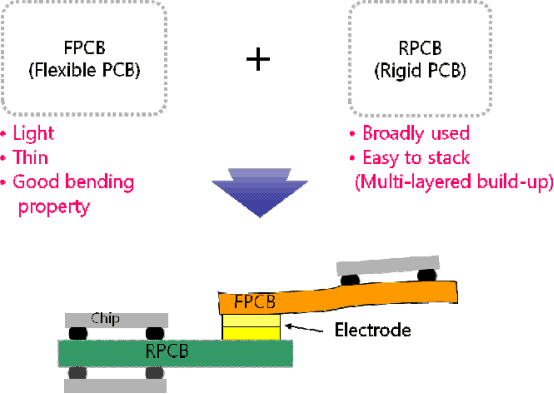
FPC holds unique advantages that set it apart from other types of PCBs, making it irreplaceable in current electronic product applications. The growing consumer electronics market, including vehicle electronics, wearable devices, foldable smartphones, and medical devices, presents ample opportunities for the expansion and improvement of FPC products.
Furthermore, the demand for FPCs is increasing as electronic products require flexible circuit boards to accommodate small and medium-sized displays and touch screens. In China, the FPC market has witnessed steady growth, reaching 111.193 billion yuan in 2018, a 15.94% increase compared to the previous year.
However, despite the industry’s progress, China’s FPC industry still faces a production capacity gap when compared to companies in Japan and Taiwan. While there are many local FPC companies, most operate on a workshop production basis, serving low-end electronic product manufacturers with uncertain orders and high business risks. Only a few leading companies, such as Dongshan Precision and Jingwang, have achieved economies of scale.
Nevertheless, the production capacity of China’s FPC industry continues to expand, with companies like Electronics, Hongxin Electronics, and Sandeguan going public. In 2018, China’s FPC production capacity reached 298 million square meters, with an output of 93 million square meters, marking a 16.25% increase compared to 2017.
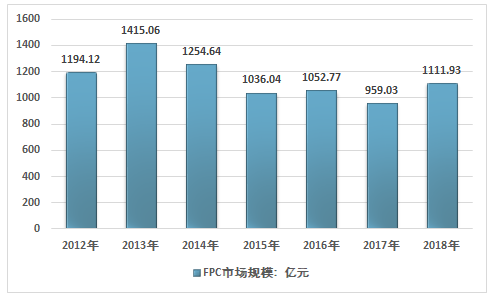
From a global perspective, FPC production companies are primarily located in Japan, the United States, South Korea, Taiwan, and China. Japanese and American companies have long focused on producing high-end FPC products, while Taiwanese and South Korean companies mainly produce mid-range FPCs. Although their production technologies and processes may be slightly lower than Japanese and American manufacturers, they have advantages in terms of comprehensive cost, electronic foundry locations, and production capacity, positioning them in the middle segment of the global market.
In the FPC market, China holds a significant position, with a relatively high proportion of shipments. However, there is intense competition in the low-end FPC market, which is primarily concentrated in mainland China. Mainland Chinese FPC companies currently have relatively weak competitiveness and a low market share.
To strengthen the industry chain and gain valuable experience, mainland Chinese FPC companies are actively pursuing industry chain cooperation. For instance, Hongxin Electronics has established solid business relationships with major module manufacturers such as BOE, Shenzhen Tianma, Oufeiguang, and Lenovo, as well as terminal electronic product manufacturers.
As China’s FPC industry chain becomes more complete, technical standards continue to improve, and production capacity steadily grows, the competitiveness of Chinese FPC companies will strengthen, leading to an increase in market share.
Globally, the development direction of the electronics industry aligns with the emergence of sustainable lifestyle habits, and the manufacturing of environmentally friendly products has become a consensus. The flexible printed circuit board industry is expected to face stricter and more urgent requirements for environmentally friendly materials, processes, and products. Consequently, flexible printed circuit board manufacturers will focus their investments on researching and developing various environmentally friendly products as a major trend.