
The report provides an overview of the rapid growth and expanding market of China's flexible circuit board industry. With the thriving demand for electronic products like smartphones and tablets, as well as the emerging markets of vehicle electronics, wearable devices, and consumer drones, significant growth opportunities have emerged for the flexible circuit board industry.
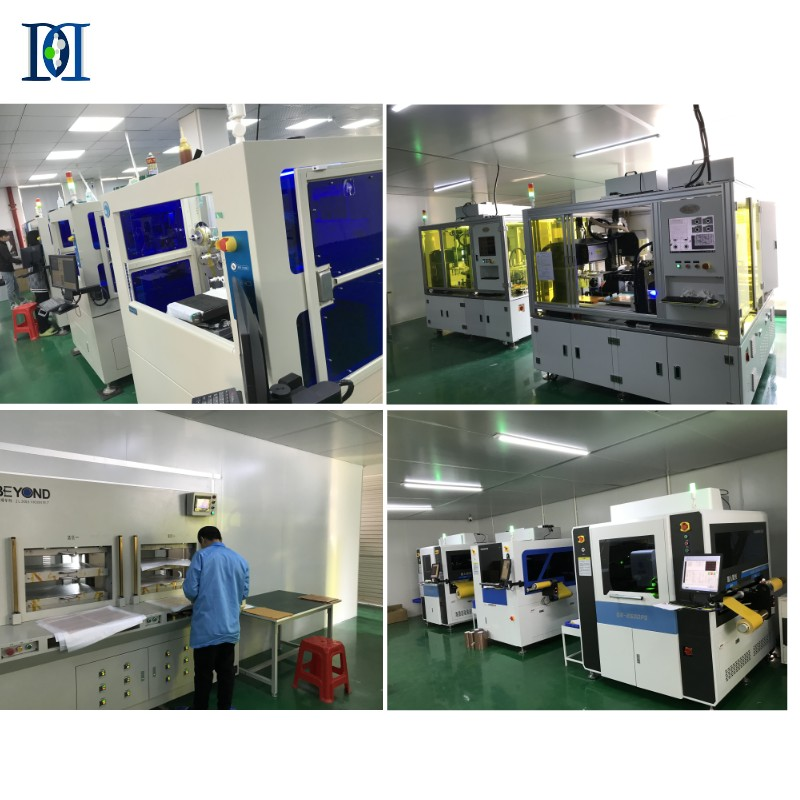
Industrial chain analysis of flexible circuit board industry
Industrial chain structure analysis
FCCL (Flexible Copper Clad Laminate) is a crucial substrate used in the production of flexible circuit boards. The selection and utilization of the substrate have a significant impact on the cost, lifespan, and performance of flexible circuit board products. The primary materials used in FCCL are polyimide (PI) film and calendered copper foil. Additionally, the main components of FPC include capacitors, resistors, electroplating additives, and other elements.
Flexible circuit board products primarily cater to the consumer market for smartphones, tablets, and wearable devices. They are integrated into display modules, touch screen modules, fingerprint recognition modules, and camera modules. Some flexible circuit board products are also directly employed in the consumer market for side keys, power keys, and other components.
Upstream analysis
FCCL
Since the 1980s, China has been actively developing its FCCL industry. In 1987, the former state-owned 704 factory took the lead in developing two types of 3L-FCCL: copper-foil-covered polyester film and copper-foil-covered PI film. In recent years, China has made significant progress, positioning itself as one of the major FCCL producers globally.
Notable domestic FCCL manufacturers include Zhongshan New High Electronic Material Co., Ltd., Huasuo Technology Co., Ltd., and Shandong Jinding Electronic Material Co., Ltd. In 2021, their respective operating revenues were 360 million RMB, 288 million RMB, and 285 million RMB.
As of 2021, China’s FCCL industry capacity reached 143 million square meters, with an industry output of approximately 70.3 million square meters. However, the capacity utilization rate remains relatively low, at around 49.2%.
PI membrane
The PI film industry, being a part of the high-tech barrier sector, has limited participants at present. The major participants in this industry include Dupont, Ube Xingco, Chongyuan Chemical, Minda, Korea SKC, and other American and Japanese enterprises. Due to the current circumstances, it is challenging to make significant breakthroughs in the short term. As a result, the manufacturing level of PI film in our country still lags behind, and the high-end PI film is predominantly reliant on imports. This dependency on imports to some extent hampers the development of the flexible circuit board and FCCL industries.
Calendered copper foil
In recent years, the production of rolled copper foil has been increasing. After surpassing the 7,000-ton mark in 2017, the total output exceeded 8,000 tons in 2020 after three years of fluctuation. Currently, key enterprises in the rolled copper foil industry include Shandong Tianhe, Jinyuan Chaohui, Sinocolor Obote, Central China Copper, Suzhou Futian, among others. Specifically, Jinyuan Zhaohui and Sinocolor Obote have plans to further expand their production during the “14th Five-Year” period. It is anticipated that there will be significant growth in rolled copper foil production in the coming years.
Downstream analysis
Smartphones
The rapid growth of the mobile phone market has created favorable conditions for the development of the flexible circuit board industry, with smartphones being the primary driver for the market’s expansion. In 2021, China’s smartphone shipments reached 3.293 million units, representing a 1.1% year-on-year increase. Domestic smartphones, known for their competitive pricing and personalized applications that align with customer usage habits, hold a significant market share.
In 2021, the shipment figures for major smartphone brands were as follows: vivo shipped 71.0 million units, OPPO shipped 67.1 million units, Xiaomi shipped 51.1 million units, Apple shipped 50.3 million units, and Honor shipped 38.6 million units. Their respective market shares were 21.5%, 20.4%, 15.5%, 15.3%, and 11.7%.
Tablets
In recent years, the rapid growth of online education in China has led to an increasing demand for tablet computers. Major tablet manufacturers in the market include Apple, Huawei, Lenovo, and Microsoft. China’s tablet shipments rose from 2.2 million units in 2017 to 2.8 million units in 2021. With the entry of various mobile phone manufacturers into the tablet market and the increasing investment from existing participants, the tablet computer market is expected to experience continuous growth. This, in turn, will drive the development of the flexible circuit board industry.
Consumer drones
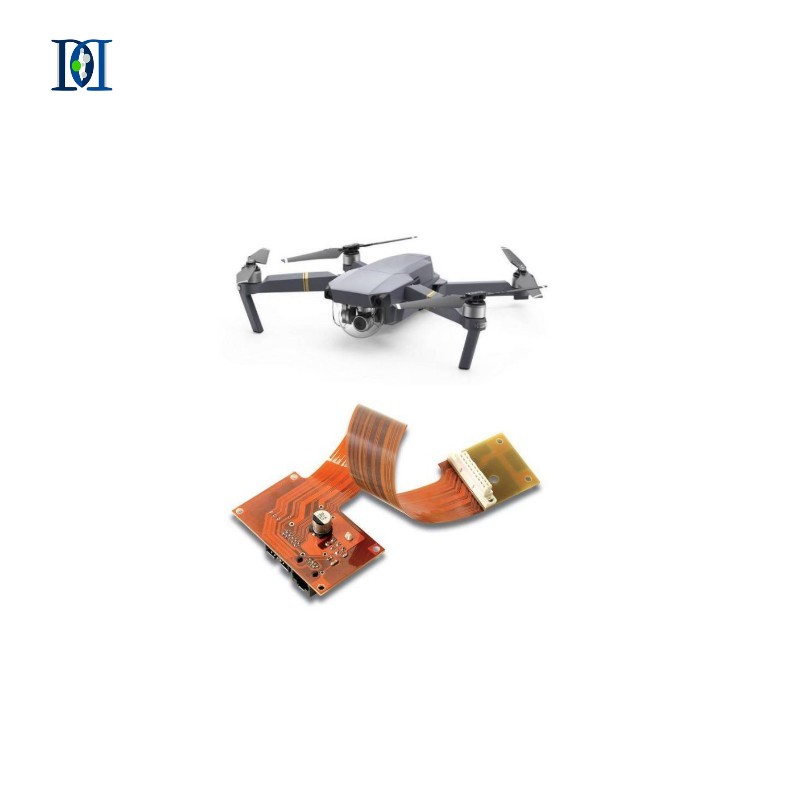
With the continuous support of favorable factors such as policies, capital, and enterprises, China has achieved significant breakthroughs and advancements in consumer UAV (Unmanned Aerial Vehicle) technology. Notably, several world-class companies have emerged in this field, including Shenzhen DJI Innovation Technology Co., Ltd. and Zero Intelligent Control (Beijing) Intelligent Technology Co., Ltd. Consequently, the consumer UAV industry market scale has been steadily growing. According to statistics, China’s consumer UAV market scale reached 3.58 billion RMB in 2017 and increased to 7.24 billion RMB in 2021. The rapid development of the consumer UAV industry in recent years has created new development opportunities for the FPC (Flexible Printed Circuit) industry.
Automotive electronics
The automobile electronics industry is closely linked to the overall development of the automotive industry. With the recent economic growth, the automotive industry has shown positive momentum. According to the China Association of Automobile Manufacturers, China’s auto production and sales in 2021 experienced year-on-year growth, marking the end of three consecutive years of decline since 2018. In 2021, the total automobile output reached 26.082 million units, with 3.545 million units being new-energy vehicles, accounting for 13.59% of the total. Additionally, a total of 26.275 million vehicles were sold, with 3.521 million of them being new-energy vehicles, accounting for 13.40% of the total.
In recent years, with the advancements in electronic information technology, the level of electronics in automobiles has increased significantly. The proportion of automotive electronics in vehicle costs has also risen. Alongside the rapid development of the automotive industry, the automotive electronics industry in China has shown a strong growth trend. This, in turn, fosters the development of the flexible circuit board industry.
Analysis of the development prospect of the FPC industry
In recent years, the electronic information industry in our country has experienced rapid development, and its industrial scale continues to expand. The market for electronic products such as smartphones, tablets, and others is booming. Additionally, the markets for vehicle electronics, wearable smart devices, consumer drones, and more are also growing rapidly. These factors provide significant impetus for the development of the flexible circuit board industry. It is predicted that the flexible circuit board market will continue to grow in the future.
According to predictions, the output of flexible circuit boards in 2028 will reach 160,866 million square meters, with a demand of 14,0281 million square meters.
However, in the current stage of electronic products, there is a continuous demand for thinner and smaller devices. As a result, the requirements for indicators such as line width, line spacing, aperture, and area wiring density in flexible circuit boards are increasing. Technological competition will dominate the future industry, and flexible circuit board enterprises with weak technical capabilities will face the risk of exiting the market.
In the face of intensifying market competition, flexible circuit board enterprises should focus on continuous innovation, process transformation, and improving production capacity to enhance their competitiveness.
Furthermore, it is suggested that flexible circuit board enterprises prioritize integrating the industrial chain and enhancing the added value of their products. Automotive displays, transmission systems, sensors, and entertainment information systems will also serve as new growth drivers and blue ocean opportunities for flexible circuit board companies in the future.