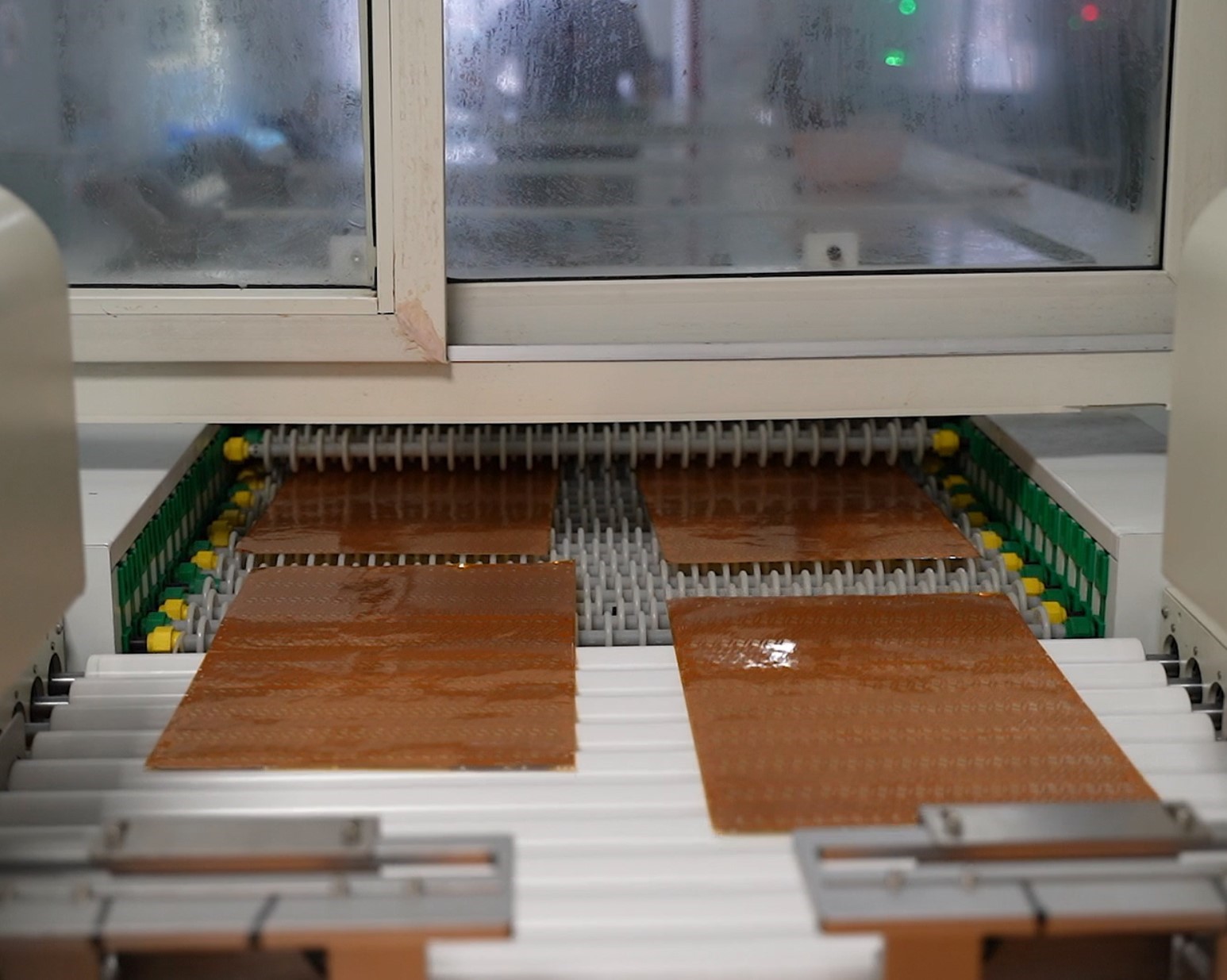
Flexible Circuit Board Immersion Gold
Advantages: Resistant to oxidation, long-term storage capability, flat appearance. Suitable for fine-gap pin welding and small solder joints. Solderability remains unaffected by repeated reflow soldering.
Disadvantages: High cost, lower welding strength due to electroless nickel plating process. Prone to black discoloration over time as the nickel layer oxidizes, impacting long-term reliability.
Flexible Circuit Board Immersion Silver
Advantages: Simple process, suitable for lead-free and SMT (Surface Mount Technology) welding. Flat appearance, low cost, ideal for precise and intricate lines.
Disadvantages: Requires strict storage conditions to prevent contamination. Welding strength may be compromised (micro-cavity issue). Prone to electrical relocation and Giovanni bite corrosion under the solder mask. Electrical testing can be challenging.
Flexible Circuit Board Nickel-Gold Plating
Advantages: Longer storage time (>12 months). Suitable for contact switch presets and gold wire bonding. Compatible with electrical testing.
Disadvantages: Higher cost, thicker gold plating. Requires an additional preset wire for electrical conduction during gold finger plating. Non-uniform appearance due to electroplating. The nickel-gold plating does not fully wrap around wire edges.
Flexible Circuit Board Tin Plating
Advantages: Suitable for parallel production and precise circuit processing. Compatible with lead-free welding and crimping technology. Excellent flatness, ideal for SMT.
Disadvantages: Requires good storage conditions, preferably within 6 months, to prevent tin whisker growth. Not suitable for contact switch presets. High requirements for solder mask process to avoid peeling. N2 gas is recommended for multiple soldering operations. Electrical testing can be challenging.
Flexible Circuit Board Organic Solderability Preservative (OSP)
Advantages: Simple process, flat appearance, suitable for lead-free welding and SMT. Easy to handle, convenient for production and parallel operation. Low cost and environmentally friendly.
Disadvantages: Limited reflow soldering cycles, not suitable for crimping technology or wire bonding. Visual inspection and electrical testing are less convenient. Requires N2 gas during SMT. Reworking SMT components can be challenging. Demanding storage conditions.
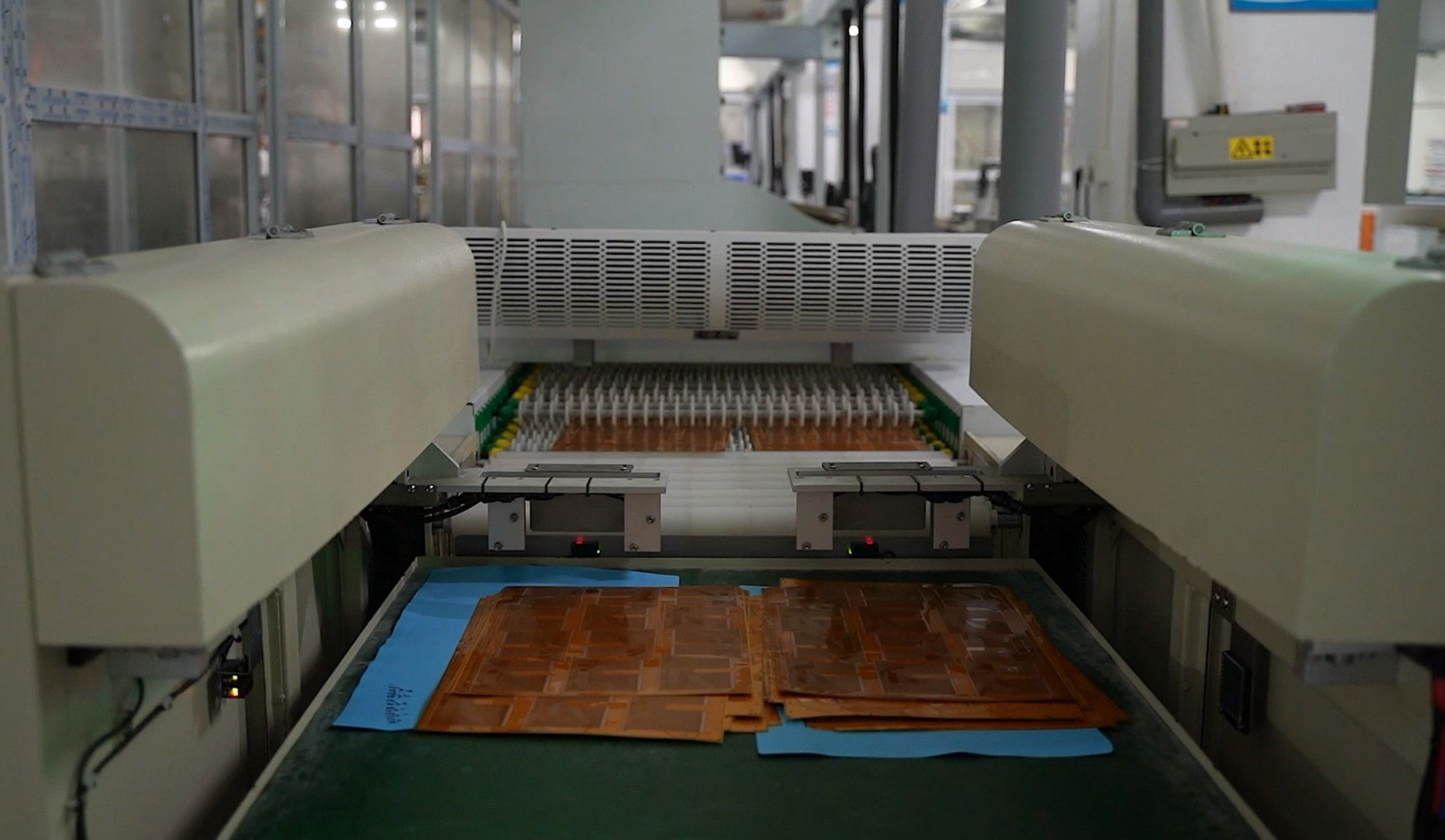
flexible circuit boardelectroplating process knowledge is as follows:
Pre-treatment of Flexible Circuit Board Electroplating
During the coating process, the exposed copper conductors on the flexible PCB’s surface can become contaminated by adhesive or ink, as well as oxidize and discolor due to high-temperature processes. To ensure a strong and tightly adhered coating, it’s necessary to remove contaminants and oxide layers from the conductor surface, making it clean.
However, some contaminations strongly bond to copper conductors and cannot be completely eliminated with mild cleaning agents. Therefore, alkaline abrasives with certain strength and polishing brushes are often used. Many coating adhesives are ring-shaped, and oxygen resins have poor alkali resistance, leading to decreased bonding strength. In the electroplating process, plating solution may infiltrate from the edge of the cover layer, causing potential peeling.
In final soldering, there may be instances of solder penetrating under the cover layer. Hence, the pre-treatment cleaning process significantly impacts the fundamental characteristics of flexible printed boards, requiring careful attention to processing conditions.
Thickness of Flexible Circuit Board Electroplating
During electroplating, the deposition speed of the metal coating is directly influenced by the electric field strength, which varies with the circuit pattern’s shape and electrode positioning. Thinner wire widths, sharper terminals, and closer proximity to the electrode result in higher electric field strength and thicker plating in those areas.
Flexible circuit boards often have wires with varying widths within the same circuit, leading to uneven coating thickness. To prevent this, a shunt cathode pattern can be applied around the circuit to distribute the uneven current and achieve uniform coating thickness across all parts.
Therefore, electrode structure plays a crucial role. A compromise solution is recommended, with strict standards for parts requiring uniform coating thickness and more relaxed standards for other parts, such as lead-tin plating for fusion welding or gold-plating for metal wire lap (welding). Less stringent plating thickness requirements apply to general corrosion-resistant lead-tin plating.
Smudges and Dirt in Flexible Circuit Board Electroplating
After plating, the coating’s appearance may initially seem fine, but over time, smudges, dirt, and discoloration may appear on the surface. This can go unnoticed during factory inspections but become apparent during customer reception. Insufficient rinsing and residual plating solution on the surface of the coating slowly undergo a chemical reaction, leading to these issues.
Flexible circuit boards, due to their softness, may have recesses where various solutions can accumulate, undergo color-changing reactions, and remain trapped until fully dried. Sufficient rinsing can be confirmed through high-temperature thermal aging tests.