
FPC is a flexible printed circuit board made of polyester film or polyimide, serving as the base material. It possesses characteristics such as lightness, thinness, high density, and foldability. Currently, 5G smartphones, smart wearable devices, and automotive electronics extensively employ FPC, and this technological wave is expected to result in a substantial surge in FPC demand.
China Domestic substitution of FPC is imminent
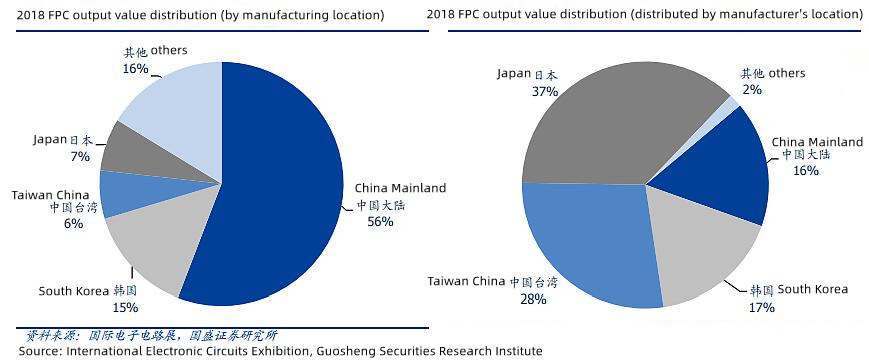
From the perspective of global FPC output value, China has emerged as a major player in FPC production capacity. Statistics indicate that China’s FPC output value surpassed 56% of the global total in 2018. However, the majority of these domestic FPC manufacturers are primarily of foreign investment, with only a fraction, less than 20%, being controlled by Chinese domestic capital. Given China’s substantial demand for FPC, the need for domestic substitution has become imminent. The country is actively supporting this initiative, and the potential for growth is immense.
Accelerated Mobile Phone Replacement Fuels Surging FPC Demand
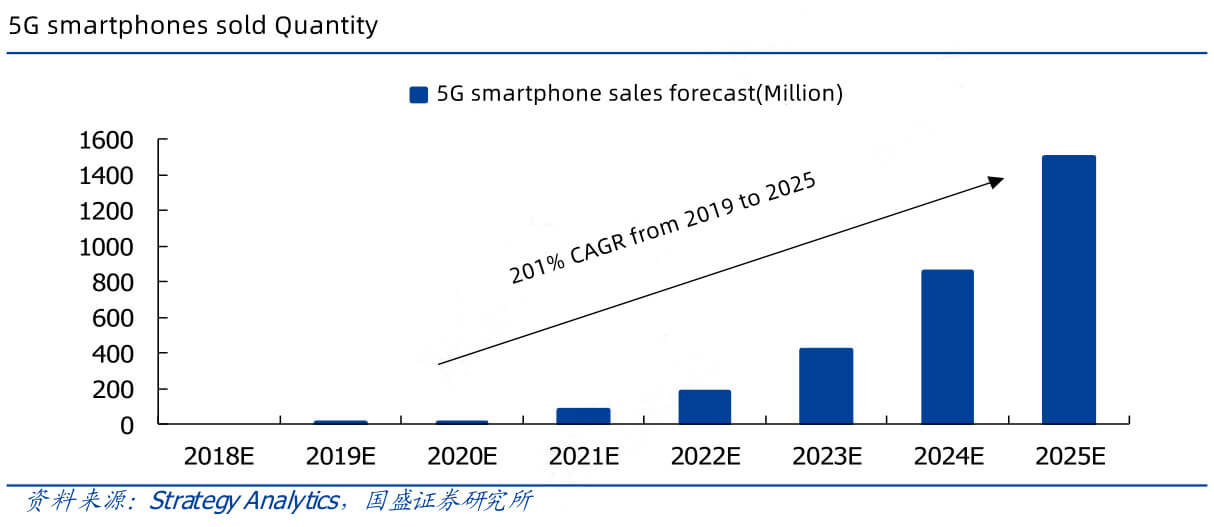
On December 10, 2019, Xiaomi officially unveiled its first 5G mobile phone during a press conference. It was not only the first 5G mobile phone priced below 2,000 RMB but also symbolized the affordability of 5G smartphones. This event signifies the onset of widespread availability of reasonably priced 5G mobile phones, which will further propel the wave of upgrades. It is anticipated that the shipment of 5G mobile phones will surpass 280 million units in 2022. Such a substantial increase in mobile phone shipments will inevitably result in a surge in demand for FPCs and subsequently drive up sales.
Steady Growth in Single-Machine FPC Consumption, Expected to Continue
From traditional feature phones to modern smartphones, mobile devices have been undergoing continuous updates and iterations. Alongside these advancements, smartphones have seen the integration of intelligent features such as fingerprint recognition, multiple cameras, virtual side buttons, and more. These additions have resulted in a decrease in available internal space within the phone.
To address this issue, traditional PCBs are being gradually replaced by foldable FPCs. This shift allows for increased usage of FPCs within a single mobile phone. For instance, while the iPhone 4 utilized 10 FPCs, the newer iPhone XS saw an increase of 24 FPCs per device. Furthermore, as smartphones become thinner, lighter, and incorporate more hardware functions, the demand for FPCs will continue to rise.
5G Era Sparks Investment Boom, FPC Among Key Beneficiaries
With the official release of the 3GPP 5G standard SA solution and the strong commitment of the three major operators to 5G research, testing, and application, the commercialization of 5G is entering a full sprint phase. Experts in the industry predict that as the 5G commercial period approaches, related industries will experience rapid expansion, presenting significant opportunities for the development of the FPC (flexible circuit board) industry, a crucial component in mobile phones. It is expected to undergo a large-scale expansion and upgrade.
The advent of the 5G era is also anticipated to trigger a new wave of investment, including in the FPC sector. Data reveals that in 2014, the global PCB output value was $57.437 billion, with FPC accounting for $11.476 billion of the total. Due to the continuous growth in smartphone, tablet, storage service, and automotive electronics sectors, the total output value of FPC is projected to reach $13.832 billion by 2022, with a compound growth rate of approximately 3.8%.
The rapid development of 5G will drive the upgrading of consumer electronics. For instance, Huawei and ZTE have initiated local area network experiments in major cities, leading to the need for upgraded mobile terminals. The testing of next-generation products also places new demands on the supply chain. Mondo Technology Electronics, a key player in the industry, has strategically positioned itself in 5G-related module technology and production capacity to maximize collaboration with downstream terminal manufacturers in the research, development, and testing of 5G commercial products.
However, it is important to note that domestic FPC companies have certain shortcomings in terms of technology, R&D capabilities, and market share compared to their Japanese and Korean counterparts. Professional makers acknowledge that Japanese, South Korean, and Taiwanese FPC companies have gained early entry and accumulated extensive experience in technology and production, securing a dominant position in the industry chain and with customers and suppliers.
Nevertheless, Mondo Technology Electronics has achieved various process capability indicators of 1.33 or higher, with a goal to reach 1.67 by 2022. Their client’s LAR value (customer incoming sampling inspection pass rate) exceeds 98%, and the DPM value (defect rate of customer input products) remains within 200PBM.
For instance, Mondo Technology Electronics can achieve line widths and line spacings as small as 35 microns, with a minimum diameter of 50 microns. In 2021, they invested in the first domestic COF (chip-on-film) production line in Xinfeng, Jiangxi, capable of achieving a line width of approximately 10 microns after production. Currently, only three companies worldwide possess the capability to achieve such thin line widths. The gap between domestic FPC companies and foreign counterparts is not significant in terms of making thinner lines on thinner materials and improving flexibility, durability, and bendability.
Furthermore, as the FPC industry is capital-intensive, maintaining technological leadership necessitates investment in highly automated equipment alongside expanding production capacity. Mondo Technology Electronics has been investing approximately 200 million RMB in equipment each year in 2018 and 2019. The COF project in Xinfeng, Jiangxi, is set to reach a significant milestone with the completion of the main plant in September this year, involving an investment of around 700 million RMB for the first test line. This investment represents a higher level of technological advancement in the FPC industry. Let’s look forward to the new era of 5G with FPC playing a crucial role.