
The Flex Rigid PCB is a type of flexible circuit board that combines the advantages of both rigid and flexible boards. It consists of a rigid board at its core, with two layers of flexible substrates on both sides. This combination of rigid and flexible elements has garnered significant attention in the PCB field. If you're interested in learning more about this product, continue reading!
Types of Flexible Circuit Boards: Common Properties and Unique Features
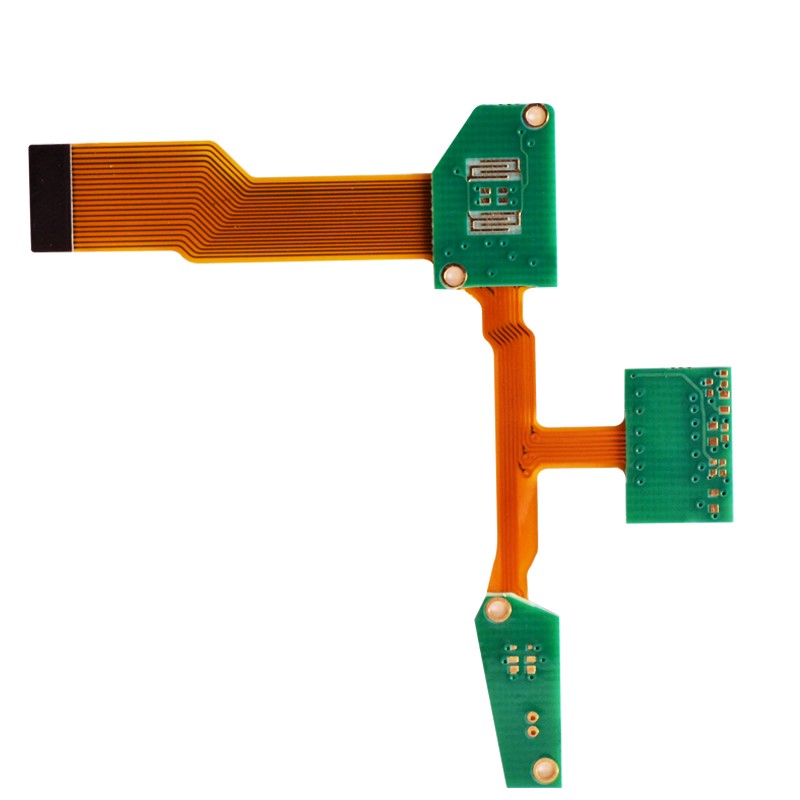
Flexible circuit boards, also known as flex PCBs, find extensive use across a wide range of applications. They are particularly valuable for products that require flexibility and durability. Flex PCBs are also suitable for applications with specific temperature requirements or high precision. The choice of flex PCB type depends on factors such as the intended application and the desired specifications of the final product.
There are two main types of flex PCBs: rigid-flex and semi-rigid rigid flex (SRF). Rigid-flex PCBs are similar to standard rigid printed circuit boards but with additional layers to achieve a thinner profile. This allows them to bend without easily breaking when subjected to mechanical forces or impact shocks over time. Moreover, they can return to their original shape even after being bent, making them ideal for various applications that demand shock resistance, avoiding potential damage to other materials like glass.
Flex Rigid PCB: Combining Rigid and Flexible Boards
A flexible PCB, also known as a flex PCB, is a type of printed circuit board or substrate that integrates both rigid and flexible components. It is constructed by permanently connecting rigid and flexible boards together. The primary objective of a flex PCB is to provide design flexibility, enabling it to withstand mechanical stress and environmental factors like temperature fluctuations, shock, vibration, and more.
Flexible PCBs have many applications including:
- Wireless devices like cell phones, tablets, sensors etc…
- Medical devices such as pacemakers, stents etc…
- Automotive Industry (Cars) – Airbag modules
Flex Rigid PCB: Rigid Core with Soft Substrates
The Flex Rigid PCB’s core consists of a rigid board with two layers of soft substrates on both sides.
Rigid-Flex circuit boards are a combination of rigid and flexible circuit boards permanently connected to each other. They provide optimal solutions for challenging space constraints.
Using Rigid-Flex circuit boards offers several advantages. They allow for the utilization of standard components in various applications, including medical, aerospace, consumer products, and industrial electronics.
Flexible printed circuits find applications in diverse fields such as medical equipment, instrumentation, automotive electronics, power supplies, displays, and telecommunications equipment.
These circuits are particularly beneficial for addressing space limitations in devices like computer keyboards, mobile phones, and handheld digital organizers.
Rigid-Flex circuit boards effectively combine the desirable qualities of both rigid and flexible circuits, making them highly suitable for a wide range of applications.
Flex Rigid PCB combines the advantages of both rigid and flexible PCBs, making it a prominent focal point in the PCB field.
Flex Rigid PCB is an innovative type of PCB that integrates the benefits of both flexible and rigid PCBs. It has gained significant attention and is widely utilized in various fields, including medical equipment, military systems, intelligent transportation systems, and more.
Conclusion
The Flex Rigid PCB is an innovative printed circuit board or substrate that brings together the advantages of rigid and flexible boards. It belongs to the family of flexible circuit boards, which exhibit shared properties while also offering distinct features. The core of the Flex Rigid PCB consists of a rigid board with two layers of soft substrates on each side, enabling flexibility in shape and size to meet customer requirements. With its exceptional structure and performance characteristics, we anticipate that the Flex Rigid PCB will gain increasing popularity in the future due to its extensive range of applications.